Wednesday, April 20, 2022

Uncle Jonesy's Cameras Podcast #48: A Handheld Camera for the Large Format Photographer

Wayne's Plaubel Marina 67 and some first prints
Wayne and I each took a bit of a spring break since our last show, and during that time both Wayne and I have enjoyed some productive photographic endeavors. Ironically, our recent photography journeys have crossed path in an interesting way. I, a long time 35mm shooter, have been trying to learn all I can about large format photography and have been shooting a Crown Graphic 4x5 camera. I also have been learning how to print such large negatives. Shooting large format has certainly altered my workflow (as I knew it would), so when I saw that Wayne, a devoted large format shooter for over forty years,  has recently picked up a handheld camera that shoots much smaller negatives, my mind was full of questions. "Does using a handheld camera change the way you approach subject selection, composition technique, exposure, focus, and darkroom work?" "Do you try to print every shot?" "Do you print small or large?"

So, UJC Podcast #48 begins with a discussion over how format effects approach, with Wayne and I each describing how we approach photography when using formats we do not usually use. In addition, Wayne give us a rundown of the Paubel Making 67, a medium format camera that Wayne has been using in preparation for times when he can't use his 4x5 camera. It's definitely a keeper camera!

Next, I relate how I ran into a major roadblock when I first began printing enlargements of the 4x5 negatives I have been making lately. I already knew about diffuser enlargers and how they differed from the condenser enlarger I''ve been using in our community darkroom. However, I didn't know anything about cold light heads, and it turns out that the 4x5 enlarger at our community darkroom has one, and it's a diffuser head to boot! In the show I share what I learned about these light sources and how I found a solution to the problems they can cause.
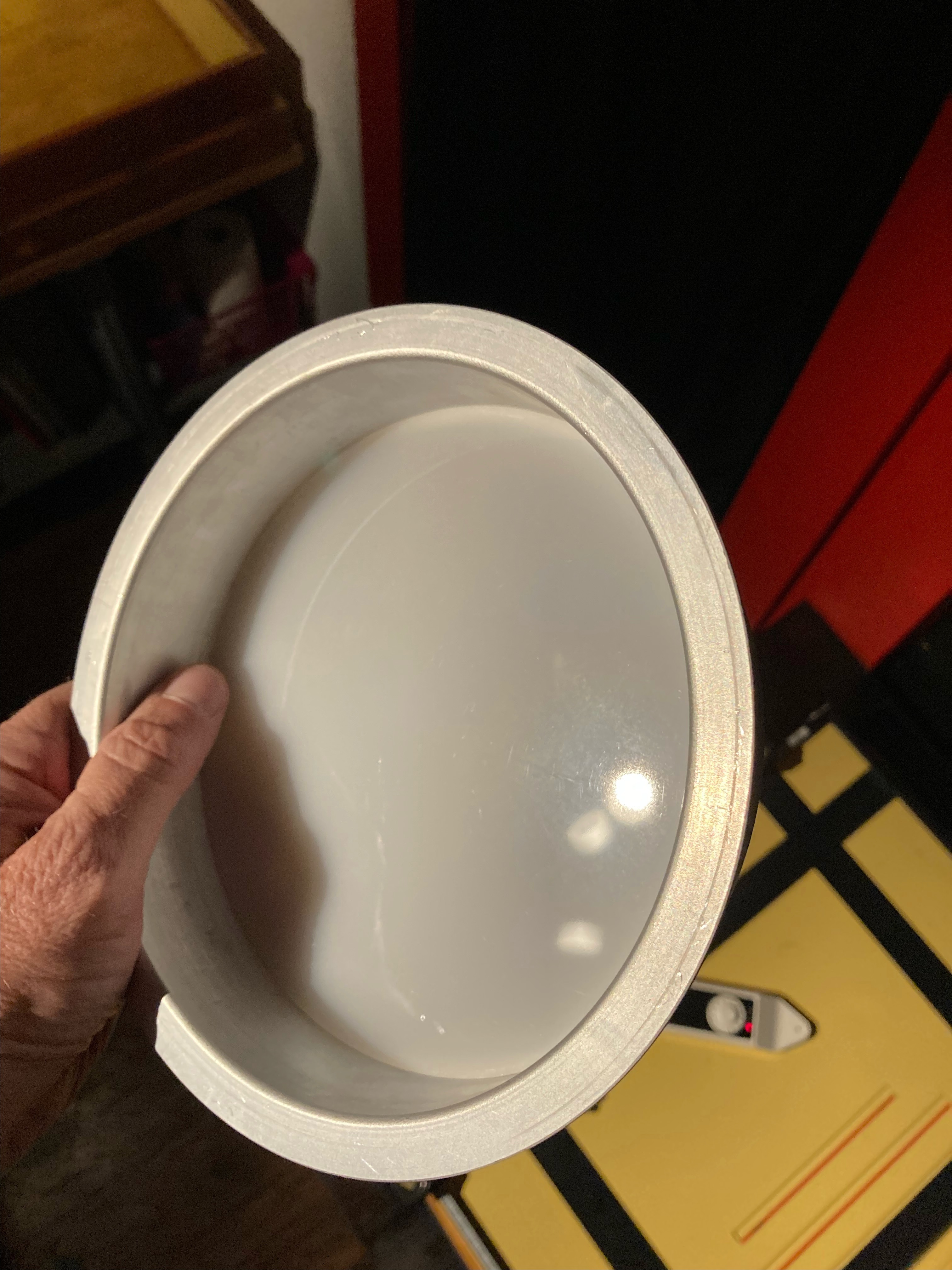
A diffuser . . .

 . . . and the blue light of cold head mean that 
variable contrast filters will be useless. (The green 
strip is the result of frequency mismatch that happens 
when trying to photograph a fluorescent light.)

Solution:  a condenser head with a
tungsten light source.

Lastly, listener Shaun Nelson, the author of the fine blog, Utah Film Photography, recently asked me if he could send me a book that he had reviewed for the purpose of giving it away. The book was Shooting Film:  Everything you need to know about analogue photography by Ben Hawkins and Liza Kanaeva-Hunsicker. I replied that I would love to get the book into the hands of someone who is just begin a film photography journey, so a few days later the book arrived. I must say that I am very impressed with the effort the authors made to make the book both useful and fun to read. So, Wayne and I want to give this book away to someone who truly needs a book like this, and here is how we are going to do this. 

1. Entries must be submitted by email to unclejonesyscameras@gmail.com

2. Entries must come from newcomers to film photography or . . . 

3. Entries must come from experienced film photographers who already know of someone who could benefit from this book.

4. Entries must explain why they (or a friend who is a film beginner) need this book and what they would like to learn from it.

Wayne and I will consider all the entries and choose the entry that best explains why the book is needed and how it will be used.

Good luck, and here is the link to Shaun's review of the book.

In the show I mention the excellent exhibit of photographs by the well-known American photographer Bruce Davidson at the Jepson Center in Savannah, Georgia. It lasts through May 1, 2022, and it is well worth your time if you can get there. https://www.telfair.org/exhibitions/bruce-davidson-face-to-face/

Until next time, Happy Shooting!

Monday, March 14, 2022

Uncle Jonesy's Cameras Podcast #47: Mixing It Up!

by Kevin Lane

I am a devoted user of Kodak D-76 for film development. Why then, have I recently become interested in mixing my own developer? The answer lies in the way I use D-76, which is always diluted 1:1 with water and disposed of after a single use. While I believe that some household cleaning products are more dangerous to the environment than D-76, I still think about all that D-76 going down the drain. Coincidentally, Wayne recently had suggested to me alternative developers like caffenol and D-23, developers that are not only more friendly to the environment, but also easy to mix at home. And Wayne should know, as he has been mixing his own developers for years. 

So, this show is all about chemistry that you can mix at home. You will learn about what equipment you will need as well as why it may work for you. For myself, I will be mixing some D-23 soon. It only requires two ingredients, both of which are friendly to the environment. And of course, Wayne's developer of choice is caffenol, which is based on instant coffee! 

 Getting ready to mix up some developer in Wayne's darkroom.

Wayne's antique Kodak chemistry scale.


Here is Wayne's formula for caffenol C-L:

            Water         500 ml
            Instant Coffee 40.0 g
            Water         500 ml
            Washing Soda     16 g
            Vitamin C             10 g
            Potassium Bromide     1.5 g 

Combine and let stand 5 minutes.

Here are Wayne's developing instructions at 68ºF:

    - Brief water presoak of 15 – 20 seconds with agitation.

    - Pour in caffenol developer and agitate gently for the first ten seconds. Let stand for fifty minutes.

    - Stop and fix a normal.

For those of you who want to give mixing your own chemistry a try, the Photographers Formulary is an invaluable resource for supplies and information. https://stores.photoformulary.com

Here is the link for the digital scale that Wayne recommended to me:  https://www.amazon.com/dp/B083HRD96K?psc=1&ref=ppx_yo2_dt_b_product_details

The Darkroom Cookbook by Steve Anchell is a compendium of photographic chemistry formulas and best practices and is now in its fourth edition:  https://www.amazon.com/Darkroom-Cookbook-Alternative-Process-Photography/dp/1138959189/ref=sr_1_1?crid=2Q6XQQORH2HC8&keywords=darkroom+cookbook&qid=1647203860&s=books&sprefix=darkroom+cook%2Cstripbooks%2C82&sr=1-1

Here is the link for the free online version of the third edition of The Darkroom Cookbook:  https://silveronplastic.files.wordpress.com/2017/10/the-darkroom-cookbook-3rd-ed-s-anchell-elsevier-2008-ww.pdf

The Caffenol Cookbook that Wayne mentioned can be found here:  https://www.caffenol.org/2012/11/27/the-caffenol-cookbook-bible/e

Here is a lengthy blog site dedicated to the use of Caffenol:  http://caffenol.blogspot.com

Wayne and I also read some great listener feedback, and one question listener Billy led Wayne to talk about his 3A Kodak Series II camera, which used 122 film. The 3 1/4 x 5 1/2 negatives were contact printed to make postcard size prints.

Wayne's 3A Kodak Series II folding camera. 
If only 122 film were still available . . . 

As always, we here at Uncle Jonesy's Cameras would love to hear from you, so send us an email at unclejonesyscameras@gmail.com. You also can find us on Facebook and Instagram

Happy Shooting!

Tuesday, February 22, 2022

Uncle Jonesy's Cameras Podcast #46: The Listeners Takeover!

 by Kevin Lane

Wayne and I finally got to record a type of podcast show that has been a dream of mine ever since the first UJC Podcast show aired back in 2017:  a show consisting only of listener-driven content. Our faithful listeners submitted some great questions, comments, tips, and stories, and we had a blast answering questions and giving highlight to what our listeners are doing with their photography. Our film photography community truly is filled with "wonderful people," as one of our listeners described them, and we dedicate this podcast to all of you with the hope that we all will learn something new (while having fun in the process!)

In the course of the show we cover a number of topics regarding darkroom workflows, enlarger types, water choices, contrast filter choices, the appropriateness of autofocus cameras, and films we'd love to shoot someday, as well as other interesting topics. I've included links to specific things and people that were mentioned below.

We'd love to hear from you before we record our next show. You can email us at unclejonesyscameras@gmail.com, and you also can find us on Instagram and Facebook, where you can post your questions, comments, tips, and stories. And if you do, you just might get your questions answered or hear your comment, tip, or story on a future show. It's all about community here at the UJC Podcast.

Thanks for listening and Happy Shooting!

Here is a link to a video tour of Wayne's darkroom.

And here is a look at Wayne's print washing setup that uses the Kodak Tray Siphon


Our good friend of the show Mark Gilliland is a talented professional photographer located in Ringgold, Georgia, near Chattanooga, Tennessee. You can find his work on Instagram here:  @magill3179.

Another friend of the show is Paul "Bear" Brown, who is a professor at Savannah College of Art and Design in Savannah, Georgia. You can find him on Instagram here:  @filmprofesorbear.

We mentioned Jr Wyatt's latest darkroom work with pinhole images. You can see that image on Instagram here:  @wyattshootsfilm.

Wayne mentioned the Photographer's Formulary, and online store that sells all kinds of chemistry ingredients for mixing your own photography-related chemicals. You can find them here.

I recently purchased a Giottos AA1910 Medium Rocket Air Blaster as an alternative to cans of compressed air to dust off negatives and lenses. You can find it as Amazon here (we don't do affiliate links.)

I really enjoy reading the Casual Photophile website! Here is a well-written article on the subject of "not-so-cool" autofocus SLRs and why we should be using them.

And here is the ariticle that introduced me to Agfa Codex Rapid black and white film (rebranded as Nanotomic -X. I definitely want to give this film a try.

I also really enjoy reading the Cosmo Foto website, and I write for them occasionally. Here is an article I wrote in which I review the immensely successful Minolta Maxxum 7000, the first autofocus 35mm SLR with the focusing motor in the camera itself.

Wednesday, February 9, 2022

Uncle Jonesy's Cameras Podcast #45: "The 4x5 Show!"


by Kevin Lane

The Uncle Jonesy's Cameras Podcast reached a milestone this week with show #45, and to celebrate, we are celebrating all things large format with a special "deep dive" show called "The 4x5 Show." In this two-hour show, Wayne and I go step by step through the process of starting a journey into large format photography. We cover camera types and the advantages/disadvantages associated with each, necessary accessories, lenses, film, techniques, developing, and printing. Along the way, we answer some great questions submitted to us by our faithful listeners. It's all about learning - which is what we like to do best here at UJC!

I've been using a Crown Graphic press camera as my gateway into 4x5 photography 

The shutter and aperture controls are on the lens, as well as the cocking lever,
a preview lever (which opens the shutter so that you can compose your
shot by looking at the ground glass on the rear of the camera), and cable release
socket. You must remember to close the shutter and stop down to your desired
f stop before you insert the film holder and remove the dark slide.

Necessary accessories:  a sturdy tripod, an exposure meter (preferably a
spot meter), a cable release, and a loupe for accurately focusing on the
ground glass.

A dark cloth is needed to compose your image on the ground glass. I'm 
using a nylon rain jacket that has a hood. The hood fit onto the Crown
Graphic perfectly.

You'll need film, of course. Wayne's favorite film is Ilford FP4 Plus (ISO 125).
I've been using Shanghai GP3 (ISO 100).

We covered way too much information in the show itself to repeat here in these show notes, but you will see some useful links below. It's not a complete resource list by any means, but these links have helped me in my journey into large format photography, which I began recently. Of course, the real expert here is Wayne, who has been shooting large format cameras and film for over forty years. If you have any questions that weren't answered in the show, you can email them to us at unclejonesyscameras@gmail.com. The same goes for any comments, tips, and stories you may have. We'd love to hear from you!

I want to demonstrate one thing we talked about in the show, and that is how load film holders. The first thing you need to know is that it has to be done in total darkness. If you don't have a darkroom, then you will need a changing bag. It's important to get this right, obviously (as I have found out the hard way), and it's something that can (and should) be practiced. 

To help keep dust out, keep the film holders in ziplock backs whenever they are
not being used. I like to use Post-It notes to identify which shots are in which
holders and to make notes regarding exposure that will impact they way I
develop the sheets.

This sheet of 4x5 film has a notch code. hen that notch code is on the upper right corner, the emulsion
is facing you. Use gloves when handling fresh film.

Pull out the dark slide and fold back the flap on the other end of the holder, and slide the sheet underneath
the rails on both sides. If the notch code is on the upper right side, the emulsion side of the film will 
be facing the correct way.
Fold the flap down and push the dark slide all the way in, silver side out.

Insert the loaded film holder into the spring back.

Make sure it goes all the way in, and you will hear a click. Remove the dark slide when you are
ready to press the shutter button. After you have made anexposure on this sheet, reinsert the dark slide black side out.

Most large format cameras come with a standard back called a Graflok back. This back will accept non-standard film holders like the Grafmatic six-sheet holder and the various roll film backs.

This Graflok six-sheet film holder makes it possible to shoot six sheets without having to change
holders. Great for handheld press photography!

The Graflox six-sheet holder The six septum each hold one sheet, and a spring system inside the holder
moves an exposed sheet to the read so that an unexposed sheet is ready to shoot. 

A Graflok back also accepts roll film holders like this Horseman 6x12. With this, you can shoot 120
roll film in your 4x5 camera and get frames that are 6x12cm. Horseman also made holders for shooting
6x4.5, 6x6, 6x7, and 6x9.

Like other large format film backs, the dark slide must be removed then exposing the film.

Large Format Photography Links

Mat Marrash's YouTube channel has been immensely helpful to me, and I cannot recomment it enough:  https://www.youtube.com/c/MatMarrash/featured

Just about every aspect of large format photography has been covered and discussed at the Large Format Photography Forum. https://www.largeformatphotography.info

Ilford seems to be the film manufacterer most dedicated to large format photography, and you can explore their LF film offerings as well as chemistry and paper supplies here:  https://www.ilfordphoto.com

The Film Photography Store also is a great resource for film and darkroom supplies:  https://filmphotographystore.com

Although you have to dig around some to find it, B&H sells large format film from a variety of makers such as Kodak, Ilford, and Foma. https://www.bhphotovideo.com

The Shanghai GP3 4x5 film that I have been using is available from Amazon Prime here:  https://www.amazon.com/gp/product/B07FKJC4VG/ref=ppx_yo_dt_b_asin_title_o01_s00?ie=UTF8&psc=1

Wednesday, January 26, 2022

Uncle Jonesy's Cameras Podcast #44: SR-Teeerrific!

After some horrible recording conditions and some uploading shenanigans courtesy of yours truly, Wayne and I are back with a new show that we think is terrific - SR-Teerrific, that is! I start the show by discussing my purchase of a new (to me) camera, a black Minolta SR-T 102. I have two many cameras already (and I am currently trying to reduce that number - see below), but I made an exception for this camera, and if you listen to the show, you will find out why. You may even find yourself wanting one, because the Minolta SR-T camera line was really quite remarkable then and still so now. My camera came with some issues, however, and I discuss how I repaired the meter system in the show. If I can do it . . . 

I bought this camera to use!

The rear CdS cell has become unglued from the 
prism. And look how cloudy the glue is!

I re-glued it with clear epoxy, and now both cells are working
as they should.

The remainder of the show consists of what we hope is the future for the UJC Podcast:  listener interaction! Wayne and I tackle some great listener feedback and questions from some of our favorite "nephews and nieces" about resin coated photographic paper and toning, our favorite types and brands of photographic paper, and the ever-popular subject of pushing and pulling film - how to do it and when should you do it. Our goal for each show is to give all of us a chance to learn something new that can be useful and maybe even fun! 

Of course, to have a show that is based on listener interaction, we need your feedback in the form of questions, comments, tips, and stories. Sharing is caring, and you can share with us by sending us an email at unclejonesyscameras@gmail.com. Voice memos are welcome, too! Also, I try to keep all our listeners informed about future shows on our Facebook page, you can post or comment of one of our posts there. Finally, we are on Instagram, and we hope you will follow us. There is something truly special about the film photography community and how we freely share our knowledge and experience so that the community will continue to thrive. So please feel free to make Uncle Jonesy's Cameras your "community room."

Here is the link to a The Rokkor Files, a fabulous website devoted to Minolta manual focus cameras. Highly recommended.  

Although we are not a camera store or even a business at all, both Wayne and I have cameras for sale. You can see Wayne's Automatic Rolleiflex ("Baby Rollei") here.

You can see my Rolleicord Va here.

You can see my Holga 120N here.

Here is a link to a UJC blog post on pushing black and white film.

Here and here are two UJC posts about pushing color negative film.

Happy Shooting!

Tuesday, January 11, 2022

Uncle Jonesy's Cameras Podcast #43: Focusing on Focus

Focus, exposure, and composition represent perhaps the three most basic elements of photography technique, yet because most people today take photographs with smartphone cameras, very little thought is given to the idea of controlling focus and using it as a creative tool. Those of us who use vintage film cameras, however, usually have much more control over exactly what in the frame is in focus and what is not. So, Wayne and Kevin are here in this show to discuss focus aesthetics and how to achieve them. As a large format photographer, Wayne has complete control of focus and tends to want everything in the frame to be as sharp as possible. Kevin, on the other hand, shoots mainly 35mm film and often wants to make the background blurry while keeping the subject sharp. Learning how to control focus can become another creative tool that can take our photography to the next level.

Photo by Kevin, who was not happy about the out-of-focus foreground in the upper right.

Also in this show, Wayne discusses his experience with his Automatic Rolleiflex 4x4 twin lens reflex camera. This camera looks just like a smaller version of the classic Rolleiflex, and it shoots 127 film, a roll film that was quite common at one time but is not common today, although it is still made. Developing and printing the film requires equipment that Wayne does not have, so developing the roll and making a print from it was a serious challenge that made for a frustrating day in the darkroom. 


Photo by Wayne Setser with his Automatic Rolleiflex

Finally, Wayne and Kevin answer a listener question about flash sync and how it works. 

As always, you can be a part of the show by sending us a question, comment, or tip. You can reach us by email at unclejonesyscameras@gmail.com. You can also post a question or comment here or on our Facebook page or Instagram feed. We would be thrilled to hear from you!

Until next time, Happy Shooting!

Monday, January 3, 2022

Uncle Jonesy's Cameras Podcast #42: Welcome to Wayne's World

It's a new year, and we have a new show and a new host. We are thrilled to have Wayne Setser on the show today and even more thrilled that he is joining the UJC team along with Kelley and Kevin. We are dedicated to making a lot of great shows on the subject of film photography in 2022, so find us in your favorite podcast app and subscribe.

In this show Wayne takes the lead on an important topic for anyone who loves to hunt for old film cameras: how to test an old camera. Putting a camera through a multi-step inspection can save you some disappointment and money. And while we all love to find amazing treasures at bargain prices, it is important to keep emotions in check so that you don't walk away with a camera that needs more work than it is worth.

Kevin and Wayne answer some listener questions in this show, including one about the right camera to take on that "once in a lifetime trip." Also, we are in a goal setting mood regarding the new year. 

While it's not easy to pick one photograph that represents a "best work," both Kevin and Wayne discuss their favorites, and you can see them right here.

Here are Wayne's three favorites


And here are Kevin's favorites.


Finally, we give away the Minolta AF-Sv, otherwise known as "The Talker." Listen to the show to find out who is the lucky winner.

That's all for this show. Happy Shooting!